
RADAR Festival’s Catherine Jackson-Smith: ‘Alternative music shouldn’t have a uniform’
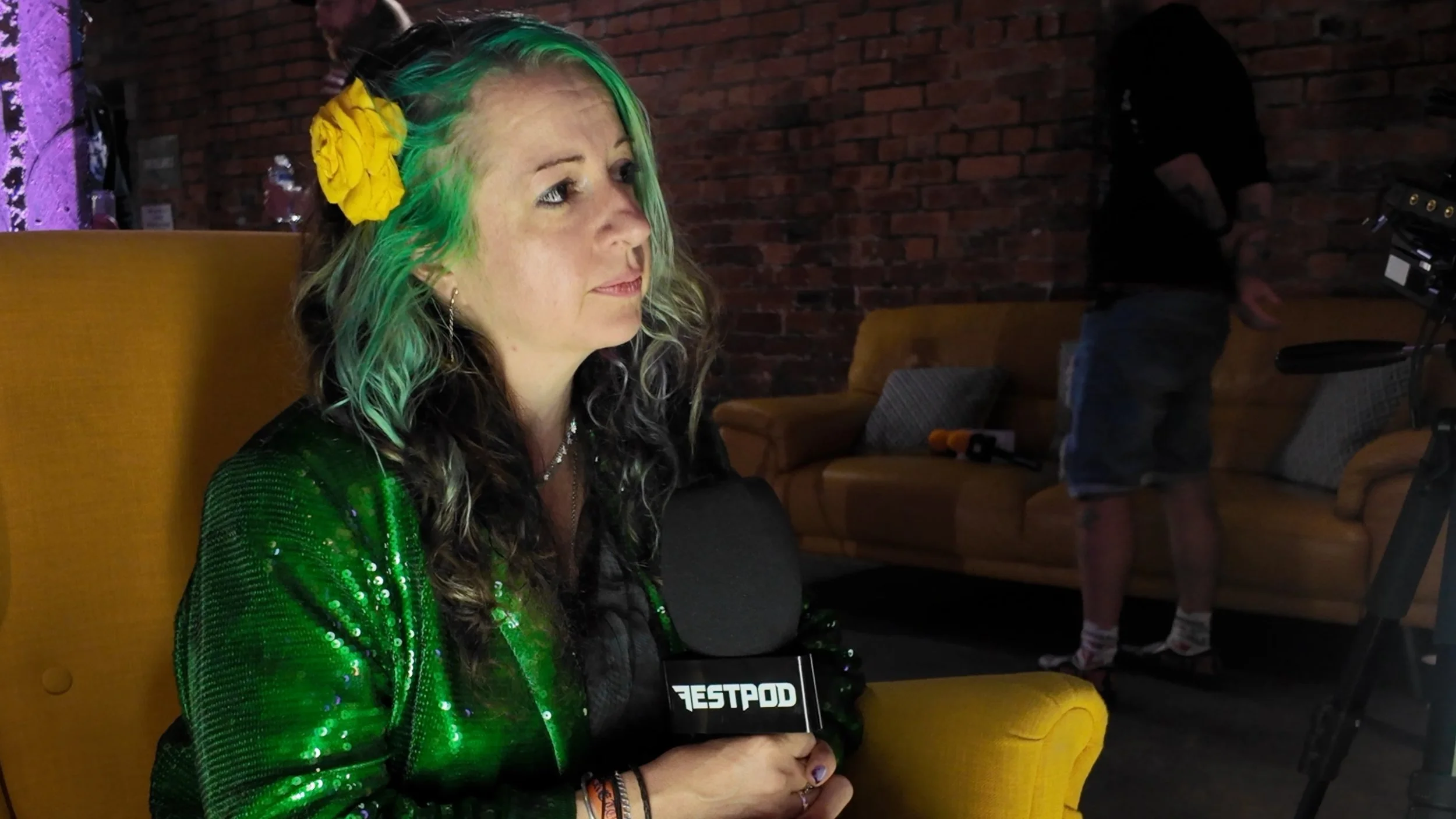
RADAR co-founder Catherine Jackson-Smith speaks to Festpod at RADAR Festival 2026.
RADAR Festival has always been built around more than putting bands on stages. If the people coming through the doors are into guitars, gaming, Warhammer, trading cards or getting their nails done, why shouldn't the festival make room for all of it?
For RADAR co-founder Catherine Jackson-Smith, that thinking comes back to something even simpler. People should be able to turn up as themselves.
“Alternative music shouldn’t have a uniform,” she told Festpod.
On the final day of RADAR Festival 2026, Neill Wilkinson and Arran Prime sat down with Catherine to talk about how the festival grew from its beginnings in Guildford, its no-clash format, the rapid rise of former headliner Sleep Token and the community that is increasingly helping to shape what RADAR becomes.
The interview was recorded at O2 Victoria Warehouse in Manchester. Since then, RADAR has announced that it will move to Magna for its 2027 edition.
From all-dayers to RADAR
Catherine founded RADAR alongside Joe James after years spent working around venues, bands and festivals.
She owns a music venue in Hampshire, where she had already experimented with all-day events featuring as many as 15 bands without clashes. At times, one band would finish and the audience could turn around to watch the next one.
The first UK Tech-Fest was also held at her venue, while acts including Monuments, TesseracT and Chimp Spanner had passed through as Catherine became increasingly connected with the progressive and technical music scene.
Joe was promoting in similar circles in Guildford and the pair had already worked together on festivals.
“There was a nice synergy in us both wanting to do something akin to what we were doing,” Catherine said.
RADAR held two editions in Guildford before reaching the limits of its original home. Finding somewhere bigger was not just a matter of finding a larger room. The festival wanted to keep two stages without clashes while creating space for everything developing around the music.
Those ideas eventually grew into the Music & Gaming Market and the other parts of RADAR that now sit alongside its live line-up.
“We didn’t want it just to be a music festival,” Catherine said. “There’s nothing wrong with that, but there’s always the option of creating something a bit more unique.”
‘Don’t be a dickhead’
That freedom extends beyond the festival programme. RADAR is independently run, which Catherine believes allows its organisers to decide for themselves what kind of environment they want to create.
“I can’t see why there would be any room to not make it as abundantly clear as possible that you are welcome at the festival,” she said.
There is, however, one rule.
“As long as you follow the ‘don’t be a dickhead’ rule, then you’re welcome.”
It is a fairly efficient festival manifesto.
That approach was visible throughout the weekend, including during Seething Akira's set, when somebody dressed as Cookie Monster went crowd-surfing across the room.
For Catherine, there was nothing particularly strange about it.
“My general thought was, of course,” she said.
The moment became a neat example of the culture RADAR is trying to create. Nobody needs to look a particular way to belong to an alternative music community.
“Alternative music shouldn’t have a uniform,” Catherine said. “If you come here in jeans and a T-shirt, there’s nothing wrong with that.”
The same applies, she joked, if somebody arrives “dressed as an accountant”.
And if they decide to come dressed as Cookie Monster?
“No one’s going to bat an eyelid.”
Sleep Token and a booking that became much bigger
One name inevitably comes up when looking back through RADAR's previous line-ups.
Sleep Token headlined the festival before their rise took them all the way to the top of Download Festival.
Catherine was clear that the RADAR booking did not come completely out of nowhere. There were already personal connections around the band, including friendships between Joe and some of its members. What those connections could not provide was a crystal ball.
Headlining RADAR and then progressing to headline Download “doesn’t normally happen”, Catherine joked, adding an apology to every other RADAR headliner whose trajectory might now be expected to follow the same path.
By the time Sleep Token actually arrived at RADAR, however, it was becoming obvious just how quickly the band was growing.
That presented another problem for the festival. Catherine and Joe did not want RADAR to become a Sleep Token show where thousands of people arrived for one band and felt no connection to anything around it.
“We don’t want this to be a Sleep Token gig and then those people don’t want to become part of our community,” Catherine recalled of their thinking at the time.
RADAR made a deliberate effort to show those visitors what the wider festival was about.
It worked.
“A lot of those fans have converted from Sleep Token fans to RADAR fans,” she said.
For Catherine, that lasting community is far more important than being able to point at an increasingly famous name on an old poster.
Guitars, Warhammer and a nail bar
RADAR's Music & Gaming Market is perhaps the clearest example of the festival building around the interests of its audience.
Catherine credits team member Jahan Tabrizi with developing the market from the original idea into what it has become.
According to Catherine, around 70 per cent of RADAR customers are musicians, so allowing people to pick up instruments and speak to manufacturers makes sense.
Gaming followed much the same logic.
“We have so many customers who are interested in Warhammer,” she said. “Is there a reason that they can’t do Warhammer at the festival? Not really. So why not provide it?”
But the most revealing example might be considerably smaller. RADAR now has a nail bar.
Catherine spoke about working in an industry that can still be heavily male dominated and the risk of designing events around assumptions about who the audience is and what they might want.
Adding a nail bar was not about providing an activity “for girls”. Neill and Rich had both had their nails done at the festival themselves, whilst Arran’s were his own work and already done.
The reasoning was much more straightforward.
“Some people that like this music like having their nails done,” Catherine said.
So RADAR gives them somewhere to do it.
The same thinking applies to trading cards, gaming and other additions that have appeared as the market has developed. They are not there because somebody has decided what a rock or metal festival is supposed to contain. They are there because people within the community are interested in them.
A festival its audience can change
Some of those ideas have come directly from the people attending RADAR.
Catherine said the festival constantly reviews feedback, including suggestions made through its Discord community. The nail bar itself followed a suggestion, while interest from fans also helped bring trading cards into the market.
“I like the fact that they’ve helped shape it as much as Joe and Jahan and I have helped shape it,” she said.
Being independent makes acting on those ideas considerably easier.
At the top of RADAR there are ultimately two people organising the festival. If Catherine or Joe spots an idea in the Discord, they can discuss it directly with each other rather than sending it through layers of management.
That gives RADAR something increasingly difficult to maintain as festivals grow. A direct relationship between the people attending and the people making the decisions.
The result is an event that is not particularly interested in telling its audience what an alternative music festival should look like.
If you want to watch progressive metal, play Warhammer, get your nails done and then watch Cookie Monster go crowd-surfing before lunch, apparently that's fine.
Just don't be a dickhead.
Related coverage:
Share this story