
“If you put accessibility first, people will come”: RADAR Festival’s Scarlett Heselwood on widening access
You can spend ages working out which bands you’re going to see at a festival. But knowing whether you’ll be able to see the stage, manage the stairs or find somewhere to take a break matters just as much.
At RADAR Festival 2026, Neill and Rich caught up with accessibility co-ordinator Scarlett Heselwood to talk about all of that. We got into sensory maps, coffee, awkward buildings and why finding out what people need starts with actually asking them.
A bit of context before we get into it: we recorded this chat at O2 Victoria Warehouse in Manchester. RADAR is moving to Magna for 2027, so the venue-specific details here describe its time at Victoria Warehouse, not the arrangements for the next festival. RADAR is preparing updated accessibility information for its new home.
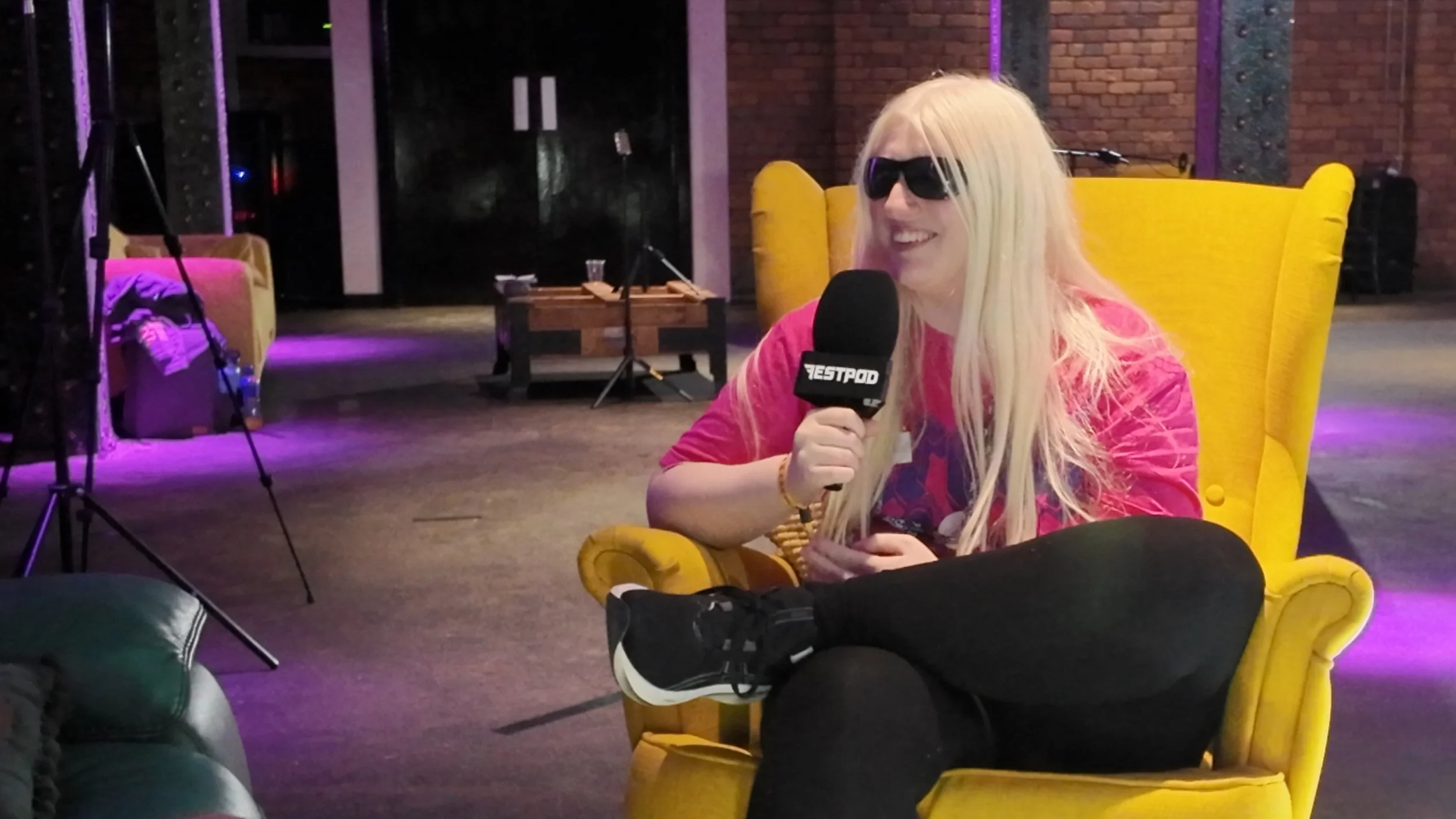
Scarlett Heselwood chats to Neill and Rich at RADAR Festival 2026, recorded at O2 Victoria Warehouse in Manchester.
There’s plenty in this conversation that goes beyond one building, though. It’s about listening to the people coming through the doors, understanding what might make their weekend difficult and working out what can be done about it.
Scarlett came to her first RADAR as a fan in 2023. She became involved in the festival’s Discord community, where helping other attendees eventually led to an invitation to join the team. By 2024, she was working her first festival, with just seven weeks to get ready.
“Here’s your email, here’s your credentials, good luck,” she recalled.
That meant getting to know Victoria Warehouse, understanding what it already offered and working out what RADAR could do alongside it. There were plenty of questions, stressed emails and lengthy messages to the organisers along the way.
But the aim was straightforward.
“That’s what accessibility is. It’s just about making things easy for people.”
Recorded at O2 Victoria Warehouse during RADAR Festival 2026. Venue-specific details relate to that event, not the arrangements at Magna.
“Everybody hates the stairs”
One of the tools used at Victoria Warehouse was a sensory map. Scarlett explained that it went beyond showing where everything was, helping people understand what being in those spaces might feel like.
Where did it get hot? Where were the crowds? What could you hear or smell? Going outside to get food might have given you a break from a band, but it didn’t necessarily mean you’d escaped the noise or found somewhere less overwhelming.
To build the map, Scarlett gathered feedback from attendees, including RADAR’s regulars and Discord community. One answer kept coming back.
“Everybody hates the stairs.”
Scarlett is visually impaired, so stairs were already something she found difficult. What surprised her was how many other people were struggling with these particular ones.
The feedback led to some extra lighting for 2026. It didn’t make the stairs less steep, but it was a practical change to help people see where they were going.
That’s a useful example of why giving feedback matters. Something that seems like a small detail in a post-festival survey could be affecting far more people than anyone realises.
Sometimes you need a brew and a sit-down
At the 2026 event, RADAR’s two stages alternated, so you could spend much of the weekend going from one set straight into the next. Great for seeing bands, but three days of music, lights and crowds is a very different experience from going to a gig for one evening.
You can love the line-up and still need some time away from it.
One of the additions we talked about was the café at Victoria Warehouse.
“We put in a café. That wasn’t actually my idea, but we did put in a café,” Scarlett said.
Alongside coffee, tea and food, including gluten-free, vegan and vegetarian options, there were beanbags and somewhere to sit and take a breather.
The café gave people another place to spend time, alongside the dedicated support available from the welfare team. Scarlett explained that this helped give attendees somewhere comfortable to go without putting everything on welfare.
“People need time away from that,” she said of the constant music and activity. “They need time to decompress.”
Getting those spaces right took work, too. Scarlett told us the previous year’s welfare location beside Stage Two had been too loud and too cramped. For 2026, it moved outside beneath Victoria Warehouse’s canopy, with more room for the team and the people using it.
At the time of our chat, she felt it was working well. But she was also waiting to hear what attendees thought afterwards.
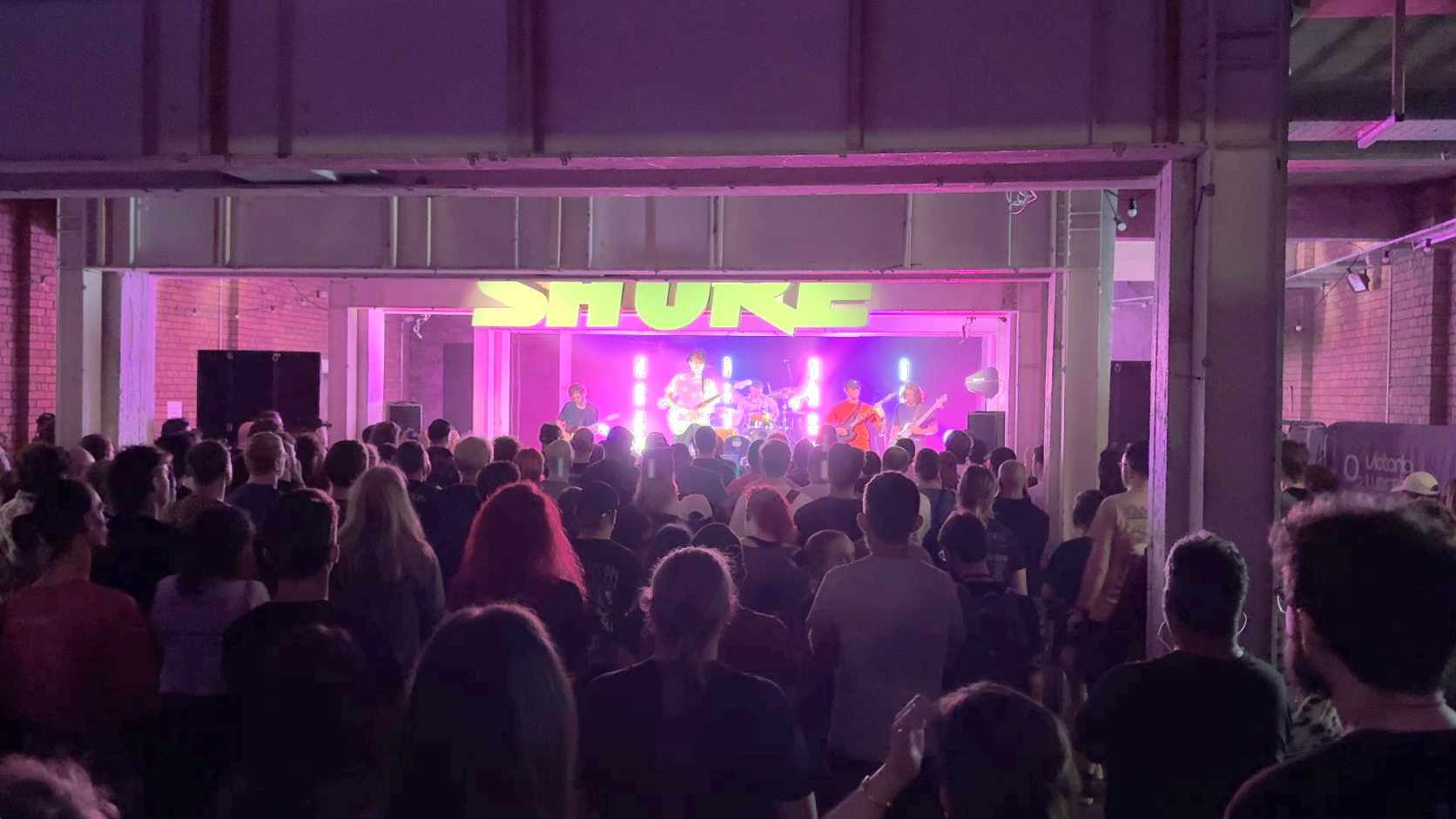
Large pillars and low ceilings at the second stage in Victoria Warehouse
You can’t move the pillars
There were some things a bit of extra lighting couldn’t fix.
At Victoria Warehouse, RADAR had to work around steep stairs, uneven floors and the layout of an existing building. The festival didn’t own the venue, so changes also depended on what the venue could do.
Stage Two was a particular challenge. The smaller room got people close to the bands, but its pillars and low ceiling made it difficult to improve the accessible viewing area.
We talked through why putting in a raised platform wasn’t a straightforward answer. As Scarlett explained, there had to be enough headroom above it and enough space for a usable ramp, without blocking an exit.
Screens towards the back helped people see what was happening on stage. But Scarlett also pointed out an important distinction: watching a screen wasn’t the same as getting that first-hand view of a band you’d come to see.
It was a compromise, not a problem she considered solved.
“We do the best that we can in the space that we have.”
That came up throughout our conversation. Scarlett wasn’t claiming every part of the venue worked for everyone. She talked about widening access, being honest about the difficulties and looking for changes that would help.
For somebody deciding whether to come, knowing about those difficulties beforehand was part of that.
Knowing what you’re getting into
There’s a lot to sort out before a festival weekend, and unanswered access questions can make that much harder. Will the facilities work for you? What will getting around involve? Is there somewhere you can go when you need support?
Scarlett told us RADAR had a 6000-word accessibility guide for its Victoria Warehouse event, with information available in advance so people could work out what to expect.
The festival also worked with Different Breed. Scarlett explained how its platform highlighted relevant information based on the access needs a user chose to share.
The point was to help people make their own decisions, without having to chase an answer to every question.
She also explained how an indoor venue could take away some of the uncertainty of a festival visit. Knowing the layout and facilities gave people something to plan around, instead of arriving without knowing whether the space would work for them.
That didn’t remove the building’s difficulties. It meant people could find out about them before committing to a weekend there.
Scarlett also stressed how much it mattered to have the organisers behind her. She said RADAR’s organisers gave her room to get on with the work, instead of having to fight for every change.
Her message was clear: “If you put accessibility first, people will come.”
“How can I help?”
Towards the end of the interview, we asked what Scarlett would say to somebody with access needs who was thinking about coming to RADAR.
“How can I help?”
It leaves room for the person to explain what they need, instead of having somebody else decide for them.
“It puts the power in their hands.”
Scarlett’s own experience feeds into that approach. She told us about being visually impaired and autistic, and about attending both difficult events and ones where the support made a real difference to her visit.
But having access needs yourself doesn’t mean you automatically understand everybody else’s. Scarlett spoke positively about people in the industry without disabilities who had taken the time to listen and learn, and said she was still learning too.
That’s where this conversation kept bringing us back: ask people, listen to the answers and do something useful with them. Sometimes that means a detailed guide. Sometimes it means rethinking a viewing area. Sometimes it means putting a light by a staircase that far more people were struggling with than you realised.
It all comes back to helping people enjoy the festival they’ve come for.
Thinking about RADAR at Magna?
The conversation gives us an insight into Scarlett’s approach and the work done at Victoria Warehouse. What that looks like at Magna needs its own information.
RADAR says it is updating its accessibility processes and preparing a new festival-specific guide covering the venue, facilities, maps and access arrangements. It also warns that Magna’s standard venue information might not fully reflect how the space will be used during the festival.
For a future visit, start with RADAR’s current accessibility information and contact the access team at accessibility@radarfestival.co.uk with questions about what you’ll need. The café, welfare location and viewing arrangements discussed in this interview shouldn’t be taken as promises for the new site.
Watch the full conversation with Scarlett Heselwood above for more on RADAR’s accessibility work, what attendees taught her and why there’s always more to learn.
Related coverage:
Share this story